
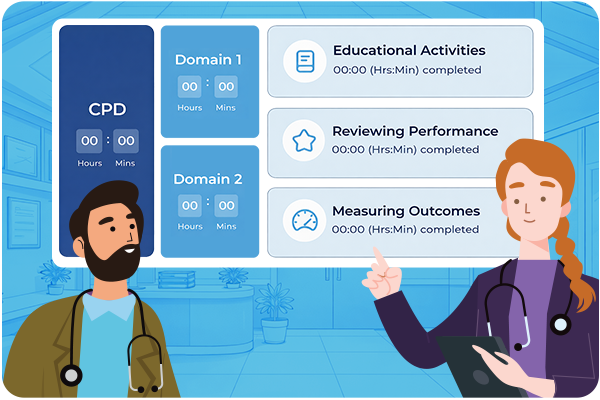
Understanding CPD Domains
Understanding the requirements of the Continuing Professional Development (CPD) Standard* can feel complex at first. At its core, however, it is simply about what we learn and how we improve. When doctors approach CPD in this way, it becomes a practical framework for maintaining confidence, strengthening skills, and delivering safe, effective care throughout their careers.
To maintain medical registration, the Medical Board of Australia* requires doctors to complete at least 50 hours of CPD each year, spread across two domains.


medicalboard.gov.au/Registration/Obligations-on-Medical-Practitioners.aspx
Within the AMA CPD Home Program, these requirements are organised into Domain 1 and Domain 2, creating a practical cycle of learning and improvement.

Domain 1: Educational Activities
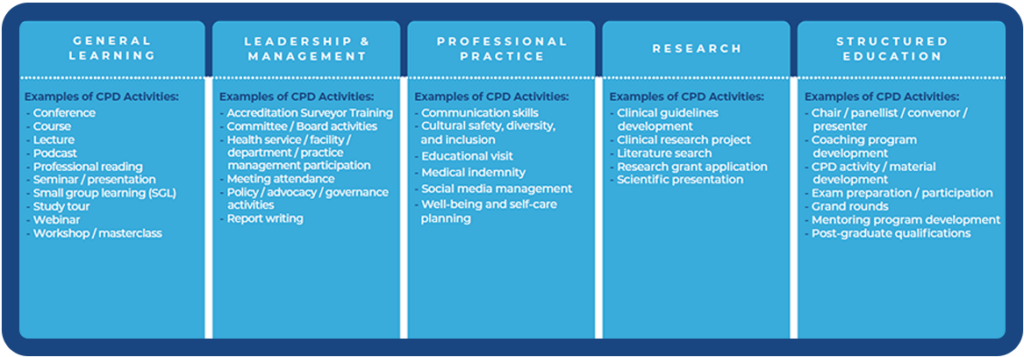
Educational Activities focus on building knowledge and capability. Examples include, but are not limited to:
- • conferences
- • courses
- • webinars
- • professional reading
- • research participation
- • structured learning such as grand rounds or post-graduate study
Answers the question: “What did I learn about?”
These activities are primarily input-focused, helping you stay current with clinical advances, strengthen diagnostic reasoning and broaden professional skills.

Domain 2: Reviewing Performance & Measuring Outcomes
Reviewing Performance (RP) and Measuring Outcomes (MO) translates your learning into real-world application. These components are linked into one domain because genuine improvement depends on both analysing and evaluating your professional practice and its impact.
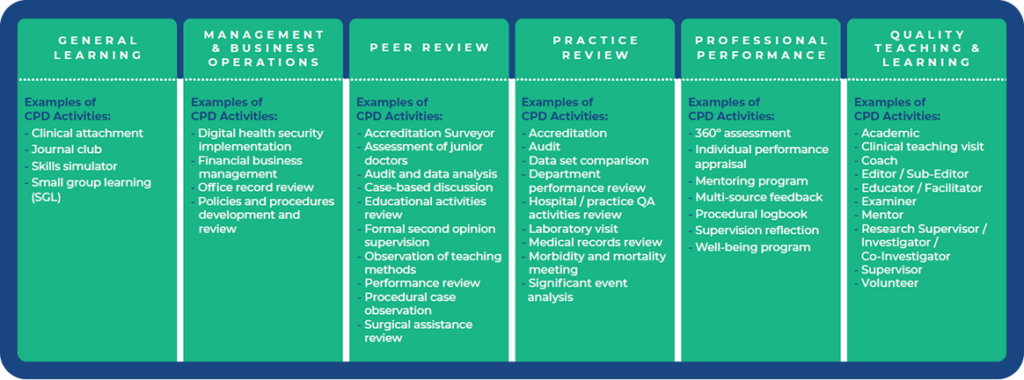
Reviewing Performance activities often involve reflection and feedback on how clinical care is delivered. This may include:
- • CPD Plan
- • peer review
- • case discussions
- • performance appraisal
- • procedural logbooks
Extends the learning: “How am I practising — and where can I improve?”
These activities help you identify strengths, address learning gaps and refine professional behaviours.
This component is output-focused. CPD activities should analyse your current actions and behaviours for improving safety,
efficiency or patient experience.
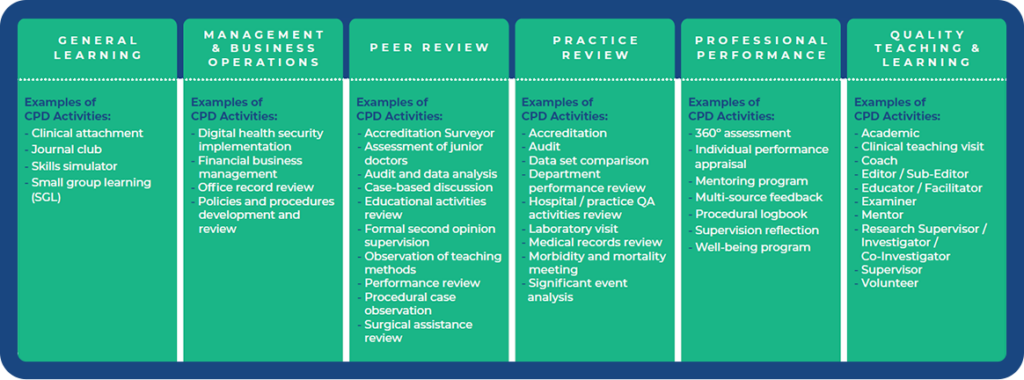
Measuring Outcomes goes further by assessing real-world impact. Example activities include, but are not limited to:
- • clinical audit
- • analysing patient outcomes
- • multi-disciplinary team meetings
- • quality improvement incentives
- • patient feedback study
Answers the question: “What difference has my learning made to me, to my practice or with my patients?”
This component is results-focused. It demonstrates whether learning and performance changes are improving safety, efficiency or patient experience.
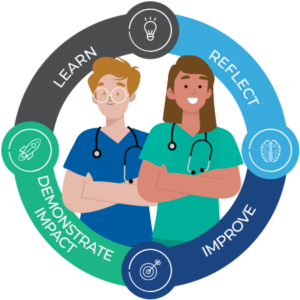
Together, these domains foster a cycle for professional growth: learn, reflect, improve and demonstrate impact. Engaging in learning across both domains helps doctors:
- • maintain clinical confidence
- • meet regulatory expectations at registration renewal
- • contribute to better patient outcomes
With the AMA CPD Home Tracker, maintaining compliance is simple.